
Bringing a newborn home changes how you look at every surface. Suddenly the kitchen counter is a bottle-prep station, the living room rug is future tummy-time territory, and the cabinet under the sink feels like a hazard zone. Parents we work with in Germantown, Laurel and Severna Park often ask the same question: how clean is clean enough, and which products are actually safe to use around a baby?
The honest answer is that a baby-safe home is not a sterile home. It is a home where the right things are cleaned the right way, harsh products are used sparingly and stored securely, and dust and residue do not build up where little hands and mouths go. This guide lays out exactly how to do that, with routines you can manage on very little sleep.
Key takeaways
- Most of a baby-safe home is ordinary cleaning with mild, fragrance-free products. The CDC notes that disinfecting at home is mainly needed when someone is sick, though surfaces should be cleaned more often when young children live there.
- For baby safe cleaning products, look for EPA’s Safer Choice label on cleaners and the Design for the Environment (DfE) logo on disinfectants, and choose fragrance-free formulas.
- Wash bottles and feeding items after every use. The CDC advises sanitizing them daily if your baby is under 2 months old, was born premature or has a weakened immune system.
- Store every cleaning product, especially laundry detergent packets, up high, locked and in its original container. Save Poison Help: 1-800-222-1222.
- In older Maryland homes, wet-wipe and wet-mop rather than dry-sweep to keep dust (which can contain lead in pre-1978 homes) down.

In this guide
- What “baby-safe cleaning” really means
- How to choose baby safe cleaning products
- Cleaning bottles, pacifiers and feeding gear
- Nursery cleaning checklist
- Floors, rugs and toys: where babies actually live
- Safe storage and poison prevention
- Older Maryland homes: dust and lead safety
- A realistic cleaning schedule for new parents
- Common mistakes to avoid
- Frequently asked questions
What “Baby-Safe Cleaning” Really Means
There is no official “baby-safe” certification for cleaning products. When we talk about baby-safe cleaning, we mean three practical goals:
- Remove what matters: germs on feeding items and high-touch surfaces, dust on floors and windowsills, spills and crumbs that attract pests.
- Leave little behind: minimal chemical residue on surfaces your baby touches or mouths, and minimal fumes in the air they breathe.
- Prevent accidents: safe storage, no mixing of products, and no cleaning chemicals left out mid-task.
The CDC separates cleaning (removing dirt and germs with soap or a cleaner) from disinfecting (killing germs with an EPA-registered product). It notes that for most households, disinfecting is likely not needed unless someone is sick, but that surfaces should be cleaned more often in homes with young children or people with weakened immune systems. In other words, clean often and gently; disinfect thoughtfully and occasionally.
How to Choose Baby Safe Cleaning Products
Labels are full of reassuring words like “gentle,” “natural” and “non-toxic,” but those are marketing terms, not standards. The Federal Trade Commission has warned that broad claims like these are hard to substantiate. Here is what to look for instead.
Labels worth trusting
- EPA Safer Choice on everyday cleaners: EPA reviews every ingredient and requires the product to perform well for its category.
- EPA Design for the Environment (DfE) on disinfectants and sanitizers: these are EPA-registered products that also meet EPA’s safer-chemistry criteria.
- Fragrance-free (not just “unscented,” which can mean a masking fragrance was added).
- A full ingredient list and clear directions, including any rinse step for food-contact surfaces.
| Area or item | Best everyday choice | When to step up |
|---|---|---|
| Bottles, nipples, pacifiers | Hot water and unscented dish soap, dedicated brush | Daily sanitizing for babies under 2 months, premature or immune-compromised (per CDC) |
| High chair tray and kitchen counters | Mild soap or Safer Choice all-purpose cleaner, then rinse | Registered food-contact sanitizer after raw meat or illness, rinsed if the label says so |
| Changing table pad | Soap-and-water wipe after messes | Registered disinfectant (DfE option) after diarrhea or illness, then let dry fully |
| Floors and rugs | HEPA vacuum plus damp mop with pH-neutral cleaner | Professional carpet cleaning for deep soil or odors |
| Hard plastic toys | Warm soapy water, rinse, air-dry | Sanitize after a sick day following the toy maker’s directions |
| Bathroom and toilet | Regular cleaner on a schedule | Registered disinfectant on the toilet and handles during stomach bugs |
If you are rethinking your whole cleaning cabinet, our guide to green cleaning products and eco labels explains Safer Choice, DfE and DIY options in more depth.
What about bleach?
Bleach is an effective disinfectant and the CDC lists diluted household bleach among its options, but it has to be used with care around babies: dilute exactly as the label directs, ventilate, keep the baby out of the room until surfaces are dry, and never mix it with ammonia, vinegar or other cleaners. Many parents find a DfE-labeled disinfectant easier to live with for the occasional sick-day clean.
Cleaning Bottles, Pacifiers and Feeding Gear
Feeding items are the one place where “clean enough” really does need a method. The CDC’s guidance on infant feeding items boils down to these steps:
- Take everything apart: bottles, nipples, caps, rings and valves.
- Rinse under running water right after feeding.
- Wash in a basin used only for feeding items, not directly in the sink, which can harbor germs. Use hot soapy water and a brush reserved for baby gear.
- Rinse again under running water.
- Air-dry on a clean, unused dish towel or paper towel. Do not rub items dry with a dish towel.
- Sanitize daily if your baby is under 2 months old, was born premature or has a weakened immune system. Boiling, steam or a dishwasher sanitize cycle are common methods; follow the item manufacturer’s instructions.
- Store fully dry, reassembled items in a clean, closed cabinet.
If your dishwasher uses hot water with a heated drying or sanitize setting and the items are dishwasher-safe, the CDC says a separate sanitizing step is not necessary. Remember to wash the basin and bottle brush regularly too.
Nursery Cleaning Checklist
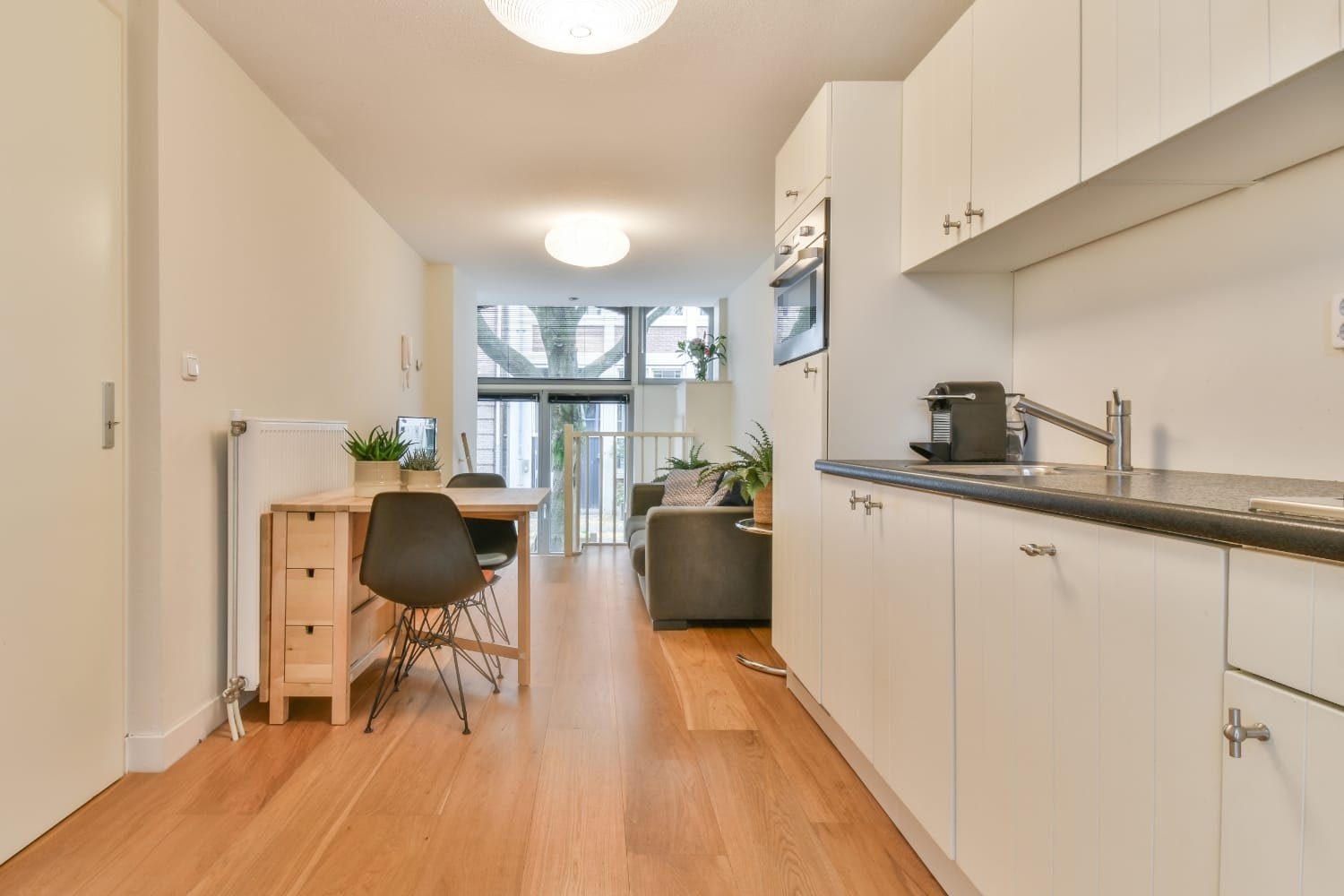
A nursery does not need daily scrubbing, but it does need steady attention to dust, fabrics and surfaces your baby touches. Use this checklist as a starting point.
Weekly
- Damp-dust the dresser, shelves, crib rails and windowsills with a microfiber cloth.
- HEPA-vacuum the floor and rug, including under the crib.
- Wash crib sheets, mattress protector and burp cloths in fragrance-free detergent.
- Wipe the changing pad, diaper pail lid and light switches with mild soap and water.
- Empty the diaper pail and wipe its interior.
Monthly
- Vacuum the crib mattress surface and wipe down the crib frame.
- Dust ceiling fan blades, vents and the tops of door frames, where dust settles out of sight.
- Wash curtains or vacuum blinds.
- Check the room for chipping paint, loose cords and anything new within reach.
Before baby arrives
Many parents book a one-time deep cleaning in the third trimester so the nursery, kitchen and bathrooms start from a true baseline: baseboards, vents, inside appliances and under furniture included. It is also a good moment to wash new baby clothes and bedding before first use.

Floors, Rugs and Toys: Where Babies Actually Live
Once your baby starts tummy time, crawling and mouthing everything, the floor becomes the most important surface in the house. Dust collects there, along with whatever comes in on shoes.
- Go shoes-off at the door and put a washable mat at each entry. Maryland winters bring road salt and slush; spring brings pollen and mud.
- Use a HEPA vacuum on rugs and carpets a few times a week, moving slowly so it actually picks up fine dust.
- Damp-mop hard floors with a correctly diluted pH-neutral cleaner. Wring the mop well, especially on wood.
- Wash play mats according to their care label, and wipe foam mats with soapy water.
- Clean toys by type: hard plastic in warm soapy water; fabric toys in the washing machine if the label allows; wooden toys wiped with a barely damp cloth and dried right away.
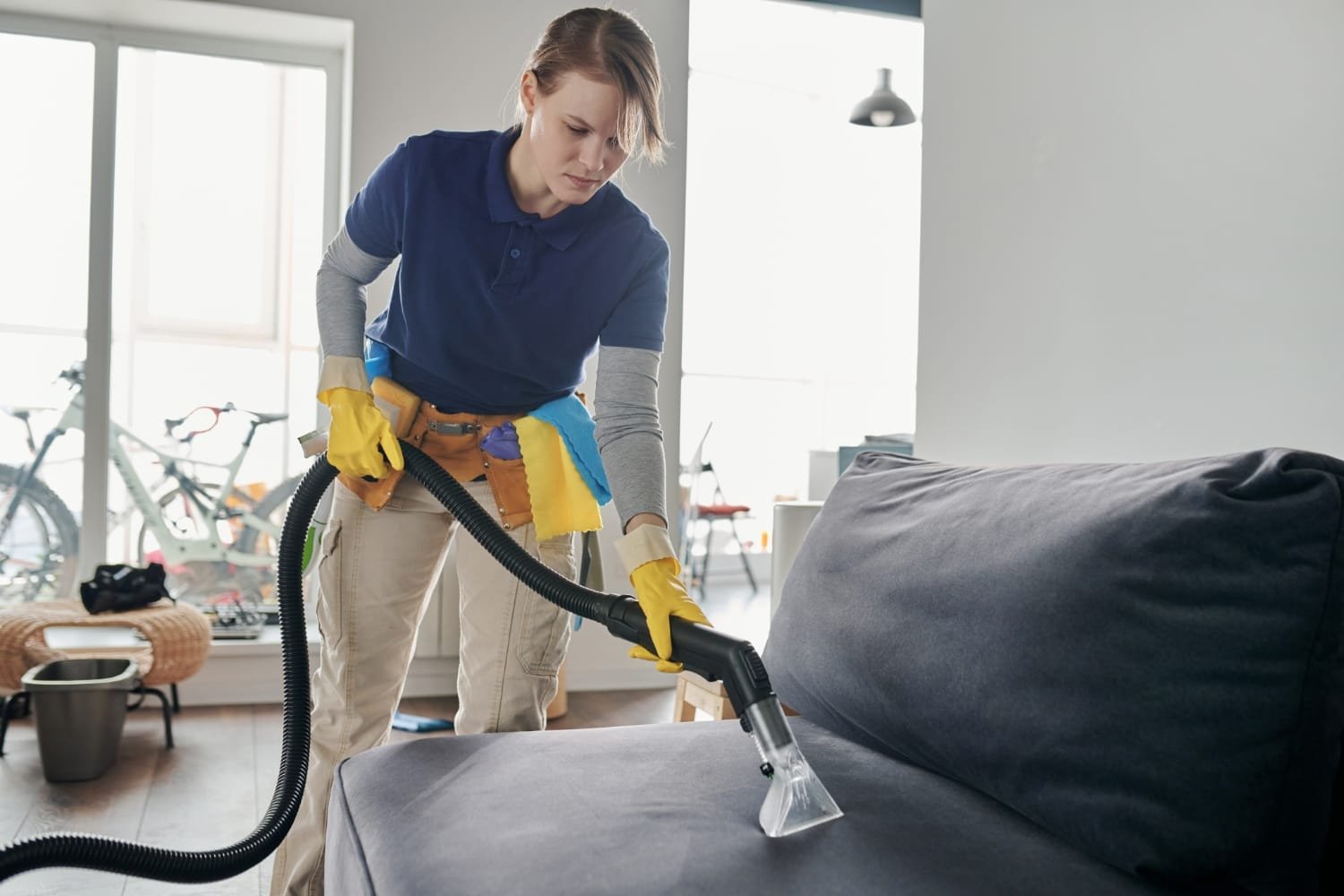
Spills on carpet and upholstery are part of life with a baby. Blot rather than rub, use plain water or a mild cleaner first, and call in professional carpet and upholstery cleaning for set-in milk, spit-up or diaper accidents that leave odors behind. Homes with pets can find extra help in our pet hair removal guide.

Safe Storage and Poison Prevention
The safest cleaning product is the one your child cannot reach. Babies become mobile faster than most parents expect, so set up safe storage before your little one starts rolling and crawling.
- Store up and locked: move cleaners from under the sink to a high cabinet, or add a child-safety latch.
- Keep products in their original containers so the label, directions and first-aid information stay with them. Never pour cleaners into drink bottles or cups.
- Treat laundry detergent packets as a special hazard. Poison center experts report that concentrated packets can cause more serious symptoms than regular detergent, including heavy vomiting and breathing trouble. Keep them in the closed original container, up high, and never leave them on the washer or in a laundry basket.
- Never leave a bucket or spray bottle unattended mid-task, even for a minute. Babies can drown in very small amounts of water.
- Save the Poison Help number: 1-800-222-1222 connects you to your local poison center, including the Maryland Poison Center. If your child collapses, has a seizure or cannot breathe, call 911.
Older Maryland Homes: Dust and Lead Safety
Maryland has a lot of beautiful older housing, from Baltimore rowhouses to mid-century homes in Catonsville and Towson. The Maryland Department of the Environment notes that the vast majority of homes built in the state before 1978 contain lead paint. When that paint chips or wears on friction surfaces such as windows and doors, it can create lead dust, which is especially harmful to young children.
Cleaning cannot replace proper lead testing or repairs, but it helps keep dust down day to day. Following CDC and EPA guidance:
- Wet-wipe windowsills and window wells and wet-mop floors regularly; EPA suggests weekly cleaning with a damp cloth or mop.
- Avoid dry sweeping and dry dusting, which push fine dust back into the air.
- Use a HEPA vacuum; Maryland law defines a HEPA vacuum by its 99.97% filter efficiency.
- Wash your baby’s hands, pacifiers, bottles and toys often, especially before eating and sleeping.
- Never dry-sand or dry-scrape old paint while preparing the nursery. Talk to your pediatrician about lead testing and visit the Maryland Department of the Environment lead program for guidance on inspections and safe repairs.
If you have recently renovated, a thorough post-construction cleaning with HEPA vacuums and wet wiping is a smart step before the baby spends time in those rooms. Our post-construction cleaning guide explains what that involves.
A Realistic Cleaning Schedule for New Parents
The newborn months are not the time for perfection. Focus on the small set of tasks that protect your baby, and let the rest slide or hand it off.
| How often | Tasks that matter most | Time needed |
|---|---|---|
| After every feeding | Rinse, wash and air-dry bottles and pump parts | 5 to 10 minutes |
| Daily | Wipe high chair and bottle-prep counter, sanitize feeding items if baby is under 2 months, quick pick-up of floor play area | 15 minutes |
| Every 2 to 3 days | HEPA-vacuum main rooms, empty diaper pail, wipe bathroom sink and toilet | 20 to 30 minutes |
| Weekly | Damp-dust and wet-mop, wash crib bedding, clean bathroom, wipe toys | 1 to 2 hours |
| Monthly | Vents, ceiling fans, baseboards, inside fridge, curtains | 2 to 3 hours |
Our post on deep cleaning vs. regular cleaning can help you decide which tasks to keep and which to outsource. Many new parents set up regular house cleaning every week or two for the first few months, and add laundry and folding to keep up with the endless onesies.
Common Mistakes to Avoid
- Disinfecting everything, every day. It adds residue and fumes without much benefit in a healthy home. Clean often; disinfect when it counts.
- Trusting “natural” or “non-toxic” claims. Look for Safer Choice or DfE, and read the directions.
- Using scented sprays and plug-in air fresheners. Clean, ventilated rooms do not need added fragrance.
- Washing bottles directly in the sink or drying them with a used dish towel.
- Mixing products, especially bleach with ammonia or acids.
- Leaving detergent packets or cleaners within reach, even briefly.
- Dry sweeping in an older home, which stirs up fine dust.
- Cleaning while baby is in the room with strong products. Wait until surfaces are dry and the air has cleared.
Frequently Asked Questions
What are the safest cleaning products to use around a baby?
For everyday cleaning, mild unscented dish soap and fragrance-free cleaners with EPA’s Safer Choice label are good choices. For the occasional disinfecting job, look for an EPA-registered disinfectant with the Design for the Environment (DfE) logo. Always follow the label, ventilate, and let surfaces dry before your baby touches them.
Do I need to sterilize baby bottles every day?
The CDC advises sanitizing feeding items at least daily if your baby is under 2 months old, was born premature or has a weakened immune system. For older, healthy babies, daily sanitizing may not be necessary if bottles are carefully cleaned after every use. A dishwasher with hot water and a heated dry or sanitize cycle also counts.
Is it safe to use bleach when you have a newborn?
Diluted household bleach is an effective disinfectant, but use it only when needed, dilute exactly as the label directs, ventilate the room, and keep your baby away until surfaces are dry. Never mix bleach with ammonia, vinegar or other cleaners because toxic gases can form. Many parents prefer a DfE-labeled disinfectant instead.
How often should I clean my baby’s nursery?
Plan on a weekly routine: damp-dust surfaces, HEPA-vacuum the floor, wash crib bedding and wipe the changing area. Once a month, add vents, ceiling fans, curtains and the crib frame. Clean up spills and diaper messes as they happen.
What should I do if my child swallows a cleaning product?
Call Poison Help at 1-800-222-1222 right away, which connects you to your local poison center, and have the product container in hand. If your child is unconscious, having a seizure or struggling to breathe, call 911 immediately. Do not try to make your child vomit unless a poison specialist tells you to.
Does MD Clean Up offer baby-safe cleaning in Maryland?
Yes. MD Clean Up offers baby-safe cleaning services with low-residue, eco-friendly product options in Montgomery, Howard, Anne Arundel, Prince George’s and Baltimore counties, Baltimore City and nearby areas. Our cleaners are background-checked and insured, and every visit is backed by a 24-hour re-clean promise.
Get Baby-Safe Cleaning Help in Maryland
You have enough on your plate with a newborn. Let our team handle the dusting, mopping, bathrooms and kitchen with low-residue, eco-friendly products while you focus on your family. Our baby-safe cleaning services are available in Gaithersburg, Olney, Clarksville, Glen Burnie and throughout our Maryland service areas. Check our pricing, browse common questions in our FAQ, or call (301) 313-5877.